Types of dental braces
◆
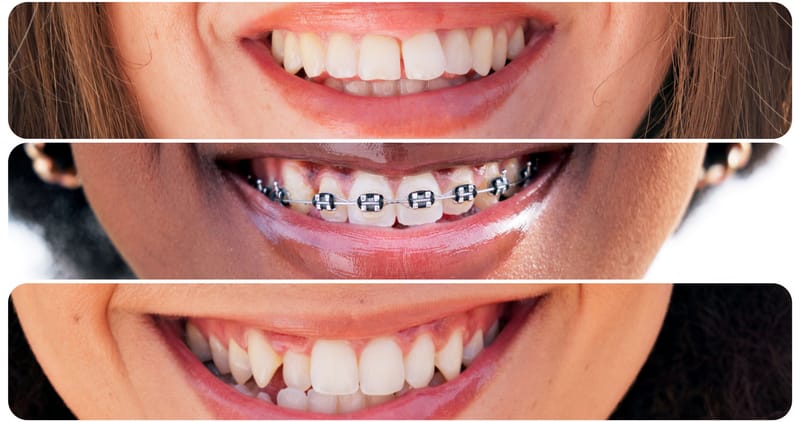
Traditional Metal Braces
What they are: Small metal brackets glued to the front of your teeth and linked with a thin metal wire.
Good points: They are the cheapest, strongest, and fix very hard alignment problems fast. You can also put fun colored bands on them.
Bad points: They are very easy to see when you talk or smile.
Ceramic Braces
What they are: Just like metal braces, but the brackets are made of clear or tooth-colored ceramic.
Good points: They blend in with your teeth so people cannot see them from far away.
Bad points: They cost more than metal, break easier, and the clear parts can stain if you eat or drink certain things.
Self-ligating brackets
What they are: An advanced orthodontic appliances that use a built-in sliding door or gate-like clip to hold the archwire instead of traditional rubber or metal ties. They offer easier cleaning, reduced friction, and potentially fewer office visits.
Good points:
Better hygiene: The absence of rubber elastics means fewer places for food and plaque to hide.
Enhanced comfort: Reduced friction and lower forces can mean less pressure and soreness on teeth.
Fewer adjustments: Appointments can be spaced further apart because the wire is held securely by the built-in gate
Bad points: higher costs, bulkier or more noticeable sizes for certain systems, and mechanical clip failures
Clear Aligners
What they are: A set of smooth, clear plastic trays that fit tightly over your teeth.
Good points: You can take them out to eat and brush your teeth, and no one can see them.
Bad points: You must remember to wear them all day and night, and they cannot fix very complex dental problems as well as fixed braces.