Bridges
◆
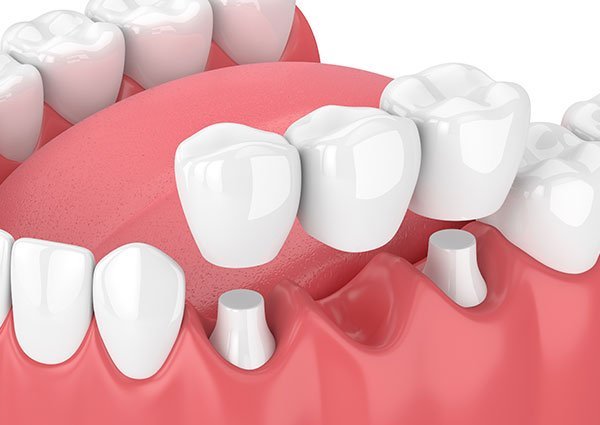
Dental bridges replace missing teeth. They can restore chewing function, enhance your appearance and improve your oral health. A dental bridge consists of crowns (that fit over your natural teeth on either side of the space) and artificial teeth (that “bridge the gap” in your smile).
What are the pros and cons of a dental bridge?
Dental bridges offer many benefits. But there are some drawbacks, too:
Advantages of dental bridges
Dental bridges can:
- Offer a natural-looking solution for tooth loss.
- Restore chewing and speech function (missing teeth can make it difficult to eat or speak properly).
- Prevent neighboring teeth from shifting into the gap left behind by missing teeth.
Disadvantages of dental bridges
Dental bridges also have some drawbacks:
- If decay or trauma results in damage to your abutment teeth, it can weaken your dental bridge.
- If your abutment teeth aren’t strong enough to support your bridge, they can fracture.
- If you don’t properly clean the bridge and underlying gum tissue, plaque and bacteria can cause gum inflammation or cavities.